
Last updated November 22, 2026
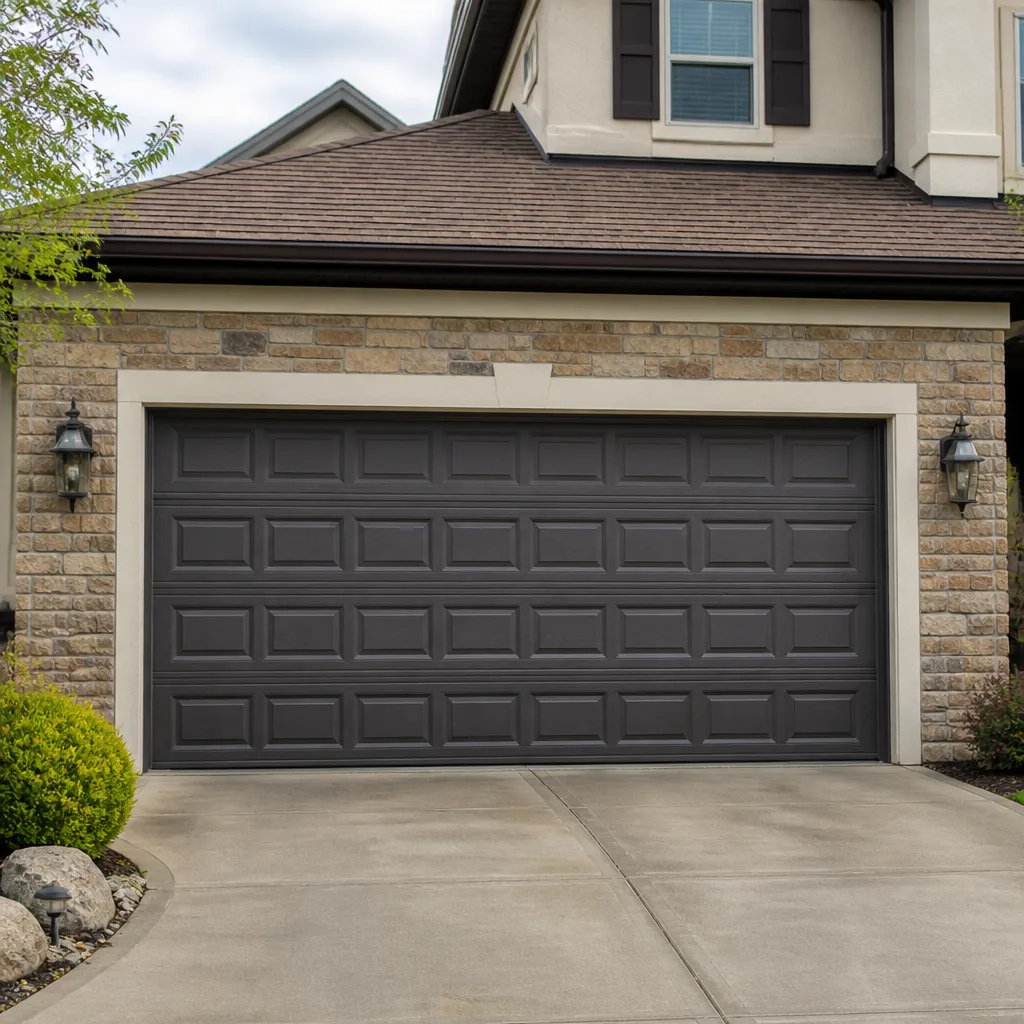 Raised-panel steel
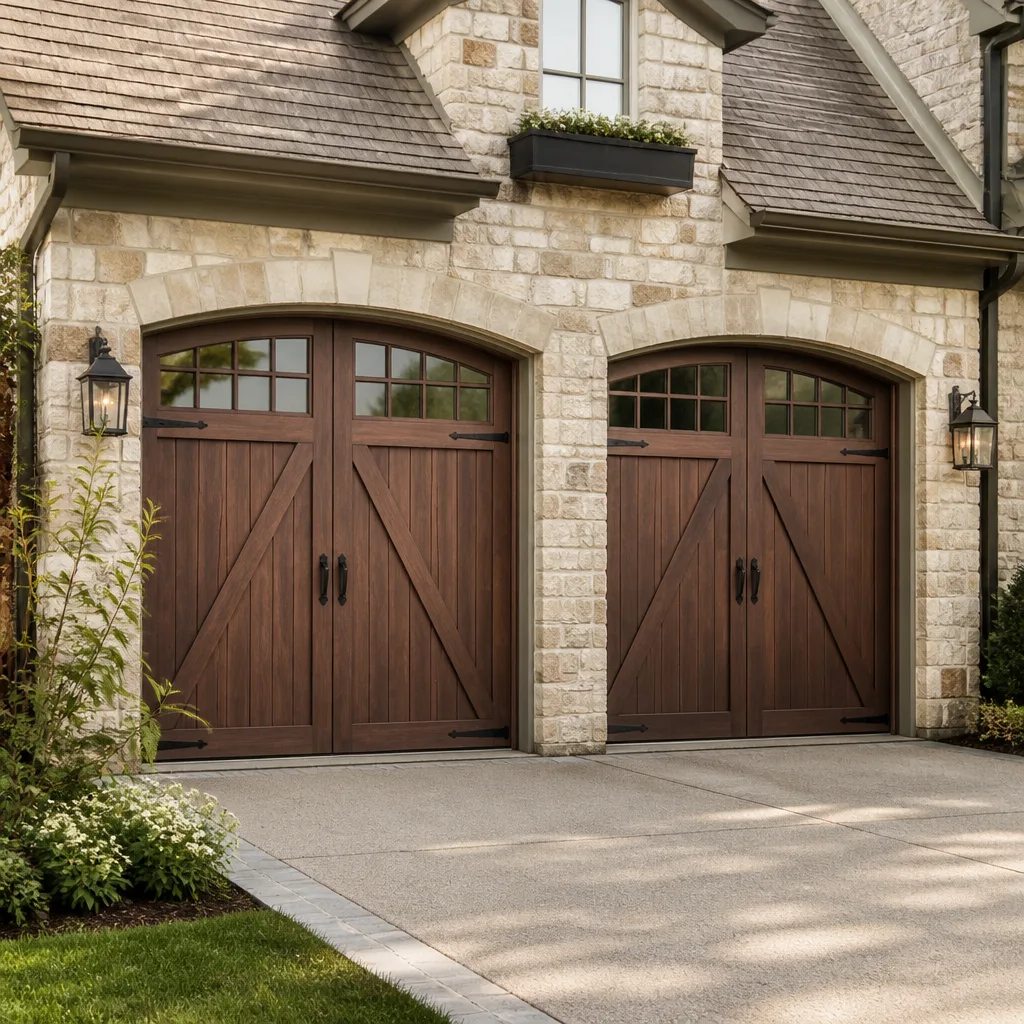 Carriage house
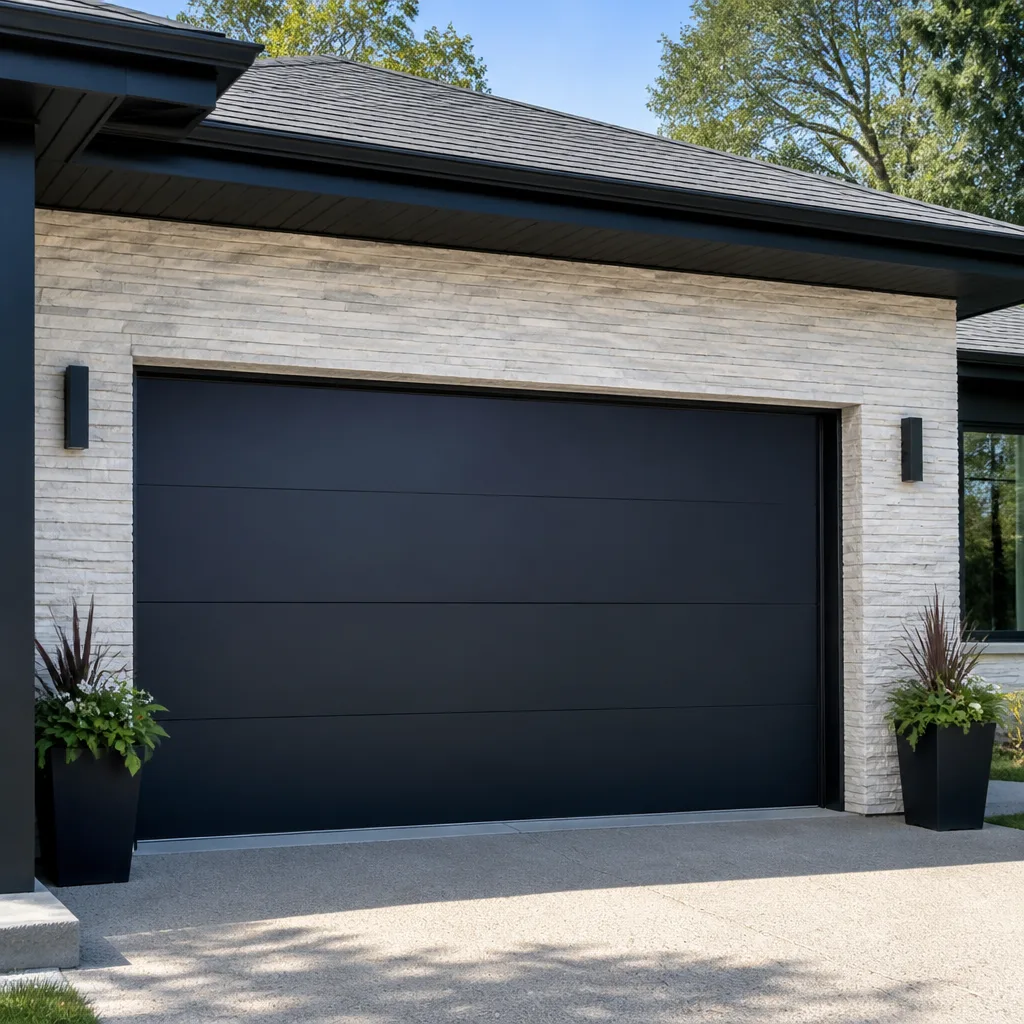 Modern flush
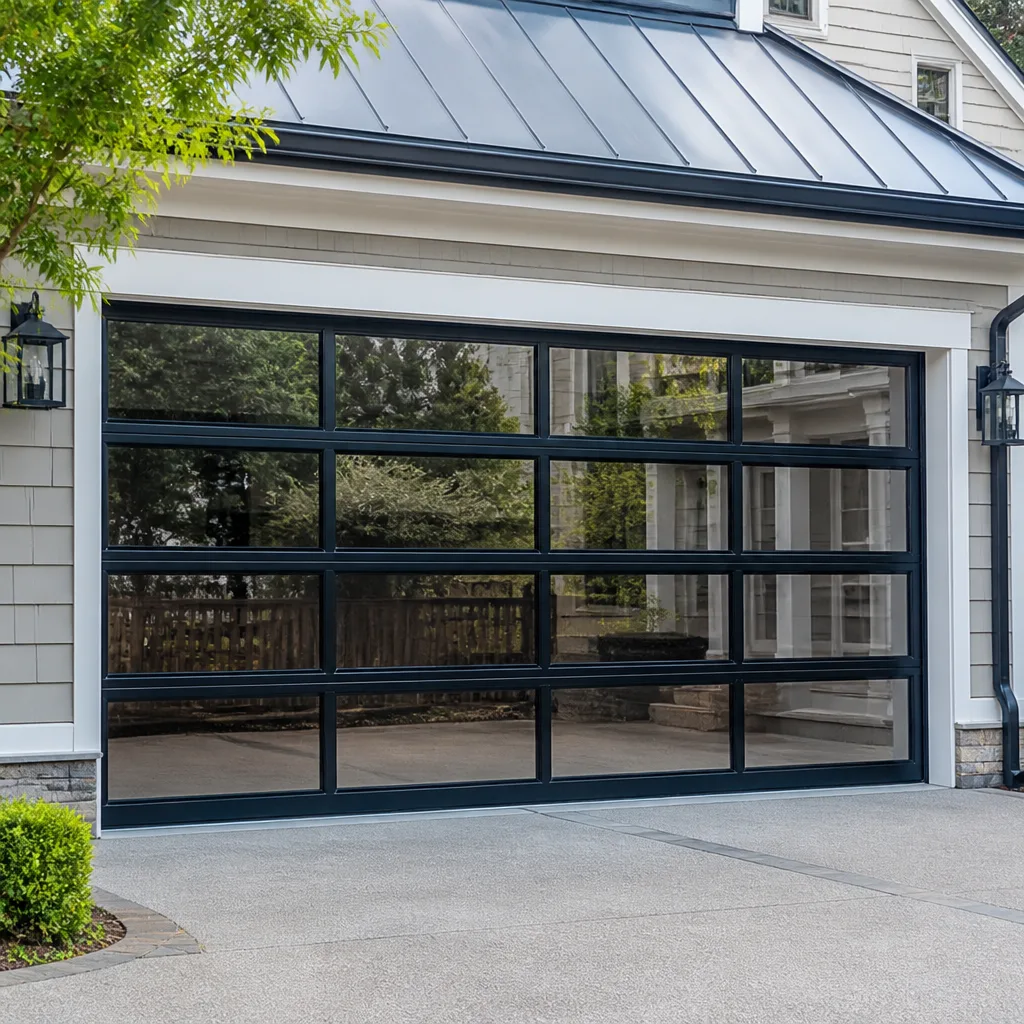 Full-view glass
 LiftMaster openers
 Chamberlain openers
Full 25-point door and opener safety check with every visit - springs, cables, rollers, tracks, and your LiftMaster or Chamberlain opener included
You get a price before we start. It does not change when the pro arrives.
Get your free estimateSeasonal Garage Door Care for Miramar: Year-Round Homeowner’s Guide
If you’re following a “winterize your garage door” guide in Miramar, you’re maintaining a door for a climate that doesn’t exist here. There’s no freeze to prepare for, no salt to rinse off, no ice to chip away. What we actually have is a two-season rhythm: hurricane season from June 1 through November 30, then the drier stretch that follows. The problems that show up in each window are different and largely predictable. This guide walks through what to check in April and May before the storms, what to do the moment a system passes, and what the dry season is actually good for. By the end, you’ll have a maintenance calendar that maps to Miramar conditions instead of a generic four-season template.
Quick Answer
Garage door care in Miramar should be scheduled around two windows, not four seasons. Before June 1, check wind-load hardware torque, test the opener’s battery backup, inspect the emergency release cable, and verify anchor bolts. After any tropical system passes, inspect the door before operating it. During the dry months from December through March, that’s when it’s cool enough to properly lubricate springs and address weatherstripping that summer heat has warped.
Styles & brands we work with
- Raised-panel steel
- Carriage house
- Modern flush
- Full-view glass
- LiftMaster openers
- Chamberlain openers
Table of Contents
- Why Miramar Has Two Garage Door Seasons, Not Four
- The April – May Pre-Hurricane Checklist
- What to Do Immediately After a Storm Passes
- Dry Season Tasks: Lubrication and Weatherstripping
- Rainy Season and Standing Water: The Bottom Seal Problem
- Opener Care in the Heat: Logic Boards and Smart Units
- Neighborhood Notes Across Miramar
- Common Mistakes to Avoid
- When to Call a Professional
Why Miramar Has Two Garage Door Seasons, Not Four
A garage door in Miramar takes a different kind of beating than one in a colder climate. There’s no freeze-thaw cycle working on the concrete, no ice loading the panels, no road salt eating at the bottom brackets. What there is, instead, is a long humid stretch, months of heavy rain, and heat that sits on the opener motor and logic board for hours at a time.
The calendar most national maintenance guides use was written for a place with a real winter. Following it in Miramar means you’re lubricating at the wrong time (grease thins and migrates faster in heat), checking wind hardware in the wrong month (storms arrive in June, not January), and skipping the one inspection that matters most after a system passes.
Here’s how the year actually breaks down:
- April and May: Preparation window. Hardware checks, battery tests, anchor verification. Done before the first named storm.
- June 1 through November 30: Hurricane season. The door is under wind load risk. Watch the bottom seal and drainage more often.
- December through March: Dry season. Cooler temperatures make this the right time to lubricate, adjust, and address weatherstripping that summer heat has degraded.
Treating those three blocks as your actual maintenance calendar eliminates most of the guesswork. It also means you’re not scrambling to find a technician in the middle of a busy storm week.
We’ve worked garage doors across Miramar long enough to know the pattern holds. The same seasonal failures show up every year, in roughly the same neighborhoods, and almost all of them are avoidable with the right checks at the right time.
The April – May Pre-Hurricane Checklist
This is the most important maintenance window of the year. May is your last realistic chance to catch problems before June 1, and the work is mostly inspection with a torque wrench. If you only do one seasonal pass all year, make it this one.
Here’s the checklist we’d walk through on any Miramar door heading into hurricane season:
- Torque-check the wind-load hardware. Every hinge, bracket, and roller carrier on a hurricane-rated door needs to be tight. Wind load on a garage door is significant, and a loose bracket under load is a failure point. Check with a socket set and the manufacturer’s torque spec.
- Test the battery backup on your opener. If you have a LiftMaster or Chamberlain unit with battery backup, that battery needs to actually hold a charge. Unplug the opener from the wall and cycle the door once. If it doesn’t move under battery power, the battery is dead.
- Inspect the emergency release cable. This is the cord that lets you disconnect the door from the opener in a power outage. Check that it’s intact, that the handle is reachable, and that the trolley releases cleanly. A snapped release cable during an outage leaves you stuck.
- Verify the anchor bolts. Look at where the track brackets attach to the floor and the header. Anchor bolts should be tight, no rust streaks, no cracked concrete around them. Any sign of movement means calling a professional.
- Check the bottom seal and weatherstripping. Run your hand along the bottom of the door when it’s closed. Gaps or tears let wind-driven rain in.
Every item on that list is something you can check yourself. Every item is also something a professional should fix if it’s out of spec. Tightening a bracket is fine. Replacing an anchor bolt or re-torquing a wind-load assembly is a job for someone who knows the door’s rating requirements.
What to Do Immediately After a Storm Passes
This is where a lot of homeowners make a costly mistake. A storm passes, the power comes back, and the first thing that happens is someone presses the button to see if the door still works. Please don’t do that.
A door that took wind load can have shifted tracks, bent rollers, or a spring under unusual stress. Running the opener before you’ve looked at the door can turn a minor alignment issue into a snapped spring or a stripped gear. Spring repair is the trade’s most dangerous work, and the fastest way to need it is to operate a compromised door.
This inspection sequence takes five minutes and should happen before you run the door:
- Visually inspect the door in the closed position. Look at the horizontal lines between panels. Do they run parallel to the floor? A door that’s racked in the tracks will show uneven gaps.
- Check the tracks. Look for bends, dents, or sections that have pulled away from the wall. A bent track means the door can’t travel safely.
- Look at the springs. With the door fully closed, the torsion springs above the door (or extension springs on either side) should be intact. A gap in a coil or a hanging cable means stop.
- Check the bottom seal. Look for tears or sections that have pulled out of the retainers.
- Test the opener by hand first. Disconnect the trolley with the emergency release and raise the door about a foot manually. If it feels heavy, binds, or makes noise, stop.
- Only then run the opener. If everything looks and feels right, reconnect the trolley and cycle the door once. Listen for unusual sound.
If anything in that sequence looks wrong, stop and call. We offer free estimates in Miramar, and a diagnostic visit after a storm is worth the call before you risk the door.
Dry Season Tasks: Lubrication and Weatherstripping
December through March is when the weather in Miramar actually cooperates with maintenance work. The humidity drops, daytime temperatures are comfortable, and the door isn’t fighting heat or rain. This is the window for the tasks that need cool, dry conditions.
Lubrication
Springs, hinges, rollers, and the opener rail all benefit from a proper lubrication pass. The trick is doing it in the right weather. In summer heat, lubricant thins quickly and migrates off the surfaces it’s supposed to protect. In the dry season, a proper lubricant film stays where you put it.
Use a garage door lubricant, not WD-40. Spray the hinges, the roller bearings, the torsion spring coils, and the opener rail. Wipe off excess. Do this once during the dry season and once at the end of it, right before hurricane season kicks off.
The springs deserve a note. Do not attempt to lubricate springs if you’re not comfortable working near them. Torsion springs under tension can cause serious injury if handled wrong. If you’re not sure, call a professional. Our spring repair specialists handle this work safely; it’s a garage door spring repair call we’d rather you make than risk your hands.
Weatherstripping
Summer heat warps the rubber weatherstripping around the door frame and along the bottom. By the time dry season arrives, that warped seal often has cracks or has pulled away from the jamb. Dry season is when you replace it. The new seal will hold through summer if installed while the frame is cool and stable.
Balance and Travel Check
Disconnect the opener, raise the door halfway by hand, and let go. A properly balanced door should hold position. A door that drifts down has a spring balance issue growing. A door that feels heavy means the springs are losing tension. Catch this in dry season and you’ll avoid a spring failure during storm season, when you least want one.
Rainy Season and Standing Water: The Bottom Seal Problem
Miramar sits on flat ground. That’s a fact of the local topography, and it matters more for your garage door than almost anything else on this list. Rain that falls during hurricane season doesn’t always drain away quickly. In low spots, standing water pools against the base of the garage door and stays there for hours after a storm.
That standing water does two things to a bottom seal. First, it works into any existing cracks or gaps, softening the rubber faster than normal wear would. Second, the water carries grit and debris that lodge under the seal and abrade it every time you open or close the door. A bottom seal that would last several years on a dry lot can degrade in half that time where water regularly pools against it.
What to look for after rain:
- Water streaks on the inside of the door, especially near the bottom edge
- A bottom seal that feels soft, swollen, or sticky
- Pooling water that hasn’t drained within an hour after rain stops
- Visible gaps between the seal and the floor in daylight
- Rust streaks on the bottom rollers or tracks, which suggest repeated moisture exposure
If you’re seeing any of those, the bottom seal needs replacing, and it’s worth looking at whether the lot drains away from the door the way it should. In some spots around Miramar, the grading was done correct but water still pools because of how streets drain. That’s a landscaping question, not a door question, but a proper bottom seal and a close eye during storm season will cover most of it.
This is also why we treat bottom seal inspections as a summer task. The seal is under load during the rainy months, and small problems find their way into larger ones quickly.
Opener Care in the Heat: Logic Boards and Smart Units
Summer is the most common time of year we see opener failures in South Florida. It’s not because anything is inherently wrong with LiftMaster or Chamberlain units, both of which are built well and hold up in most climates. It’s because a garage in Miramar gets hot, and the logic board on a modern smart opener runs in an environment that’s already near the top of its operating range.
Heat shortens the life of capacitors, stresses solder joints, and pushes the motor harder on every cycle. Then the rainy season adds humidity, which affects electrical contacts. Together, that’s a recipe for the opener that “just stopped working” in July after working fine for years.
What you can do about it
- Keep the opener clear of clutter. Boxes stacked against the motor block airflow. An opener that can breathe runs cooler.
- Test battery backup twice a year. Once before hurricane season, once after. That’s the same battery that keeps your door working in a power outage.
- Watch for slow response or hesitation. A smart opener that takes an extra second to start moving is telling you something. Check the safety sensors and the belt (or chain) tension before the unit fails completely.
- Check the wall control and remote batteries. A dead remote looks a lot like a dead opener. Test the wall control before assuming the unit is gone.
- Stay current on firmware if your opener supports it. Smart openers from LiftMaster and Chamberlain can receive updates through their connected platforms, and those updates sometimes address stability issues.
If your opener is failing and you’re not sure whether it’s the logic board, the safety sensors, the gear, or the capacitor, that’s the moment for garage door opener repair. Diagnosing the exact component is what a technician is trained for; guessing at it usually costs more than the diagnostic would.
Neighborhood Notes Across Miramar
Conditions vary a bit across the city, and that shifts the maintenance priorities. Some of the differences we’ve seen working in Miramar:
Newer subdivisions
Newer Miramar neighborhoods tend to have hurricane-rated doors and modern smart openers. That means the pre-season checklist is mostly about verification, not repair: torque-checking hardware, testing battery backup, confirming the door is still performing as designed. The risk there is assuming a newer door needs no care. It does, just less of it, and at the same seasonal windows.
Older homes and established communities
Older properties in Miramar often have doors that pre-date current wind-load standards, and openers that have been through several cycles. That shifts the weight toward replacement planning and closer attention to the dry-season balance check. A door that’s been through many hurricane seasons needs hardware inspections more carefully, especially anchor points and the bottom brackets.
Near low-lying drainage areas
Where the lots drain slowly or the street gutters back up during a downpour, bottom seal inspection should happen more often during hurricane season. Once before storm season, once mid-season, once after. It’s a five-minute check and it saves a seal replacement.
We work across Miramar and know the local conditions well enough to know which neighborhoods need closer attention to which parts of the checklist. That local knowledge is part of what makes Miramar Garage Door Repair Co a useful call when something seasonal escalates into a repair.
Common Mistakes to Avoid
- Following a national winterization guide. Winterizing a door in Miramar wastes time on tasks that don’t apply and skips the ones that do. Build the schedule around June 1 and the dry season instead.
- Running the opener right after a storm without inspecting. That extra cycle on a door that’s racked, has a bent track, or a compromised spring is the fastest path to a bigger repair. Inspect first.
- Lubricating springs with WD-40 or silicone spray. It thins and migrates, especially in summer heat. Use a proper garage door lubricant and apply it during the dry season.
- Delaying the bottom seal replacement. Standing water in Miramar degrades a soft or cracked seal faster than it would in a drier place. Replace it as soon as you see the signs.
- Assuming a modern smart opener needs no maintenance. LiftMaster and Chamberlain units are reliable, but heat stress on the logic board and battery decay are real in South Florida summers.
- Ignoring balance and travel issues until the door fails. A door that drifts down when left halfway up is warning you. Catch it in dry season, not during a storm.
- Attempting spring adjustments or replacement yourself. Spring repair is the single most dangerous job on a garage door. Torsion springs under tension cause serious injuries. Call a professional.
When to Call a Professional
Most seasonal maintenance is checkable by a diligent homeowner. The line is at anything that requires disassembly, torque adjustment beyond a socket check, or work near a spring under tension. Call a professional if:
- A torsion spring looks broken, has a visible gap, or the door has gone heavy
- A track is bent, or a bracket has pulled away from the header or wall
- The opener is cycling wrong, runs but doesn’t move the door, or a smart unit is failing to respond
- An anchor bolt is loose, rusted through, or the concrete around it is cracked
- The door is out of balance after a proper manual test
- A storm has left anything about the door looking off
Miramar Garage Door Repair Co offers free estimates in Miramar, and we handle everything from a seasonal checkup to a full garage door repair. We work on Raynor, LiftMaster, Chamberlain, Genie, and the other major brands, so we already know your system before we arrive. Call (866) 937-7841. We answer 24/7. Fast dispatch from 7am to 7pm, Sunday through Friday.
See the difference
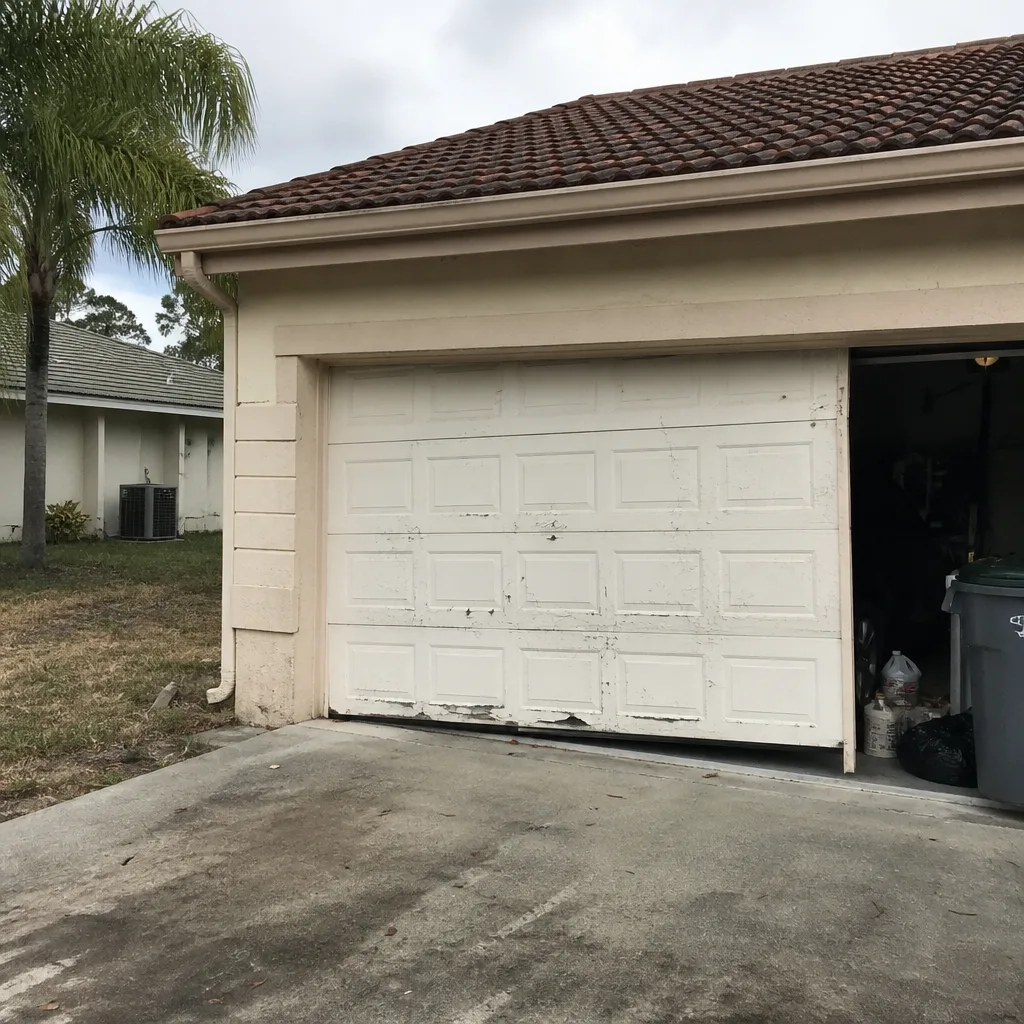 Before
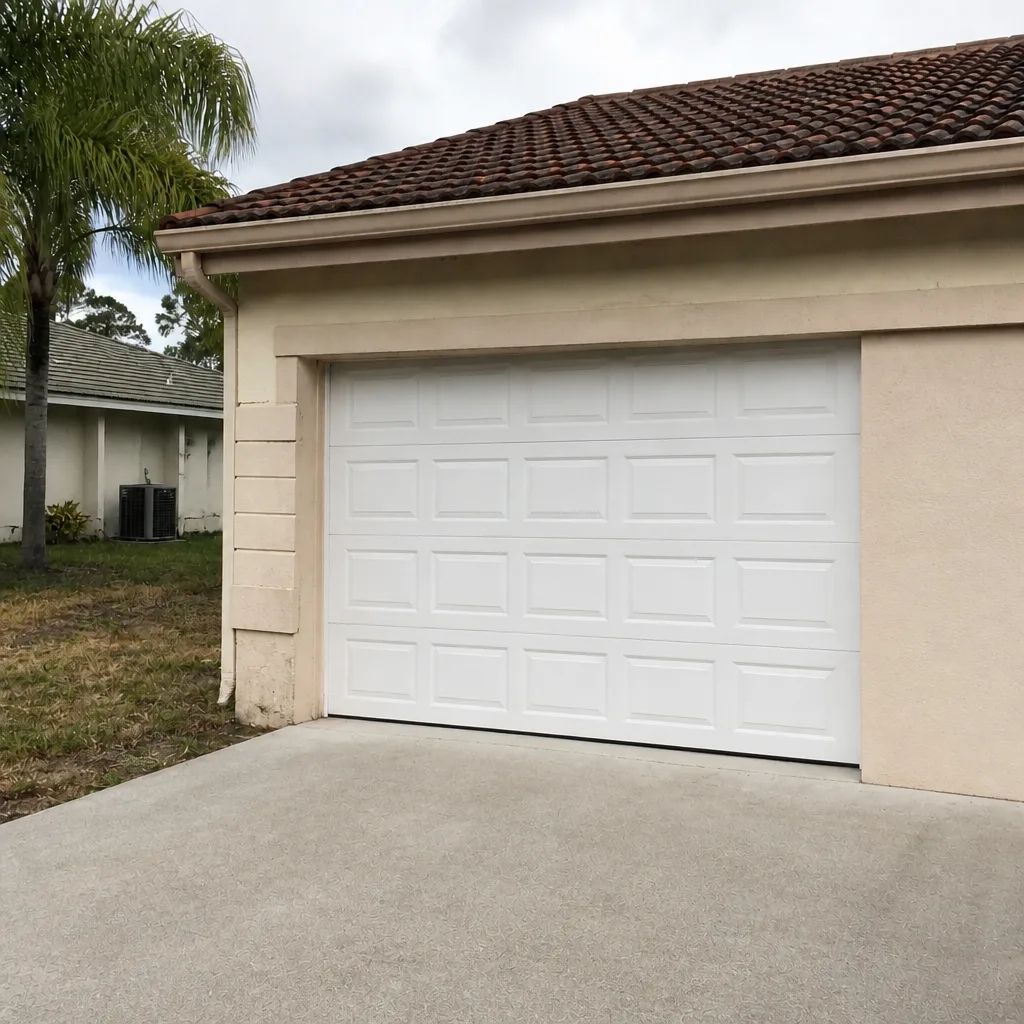 After
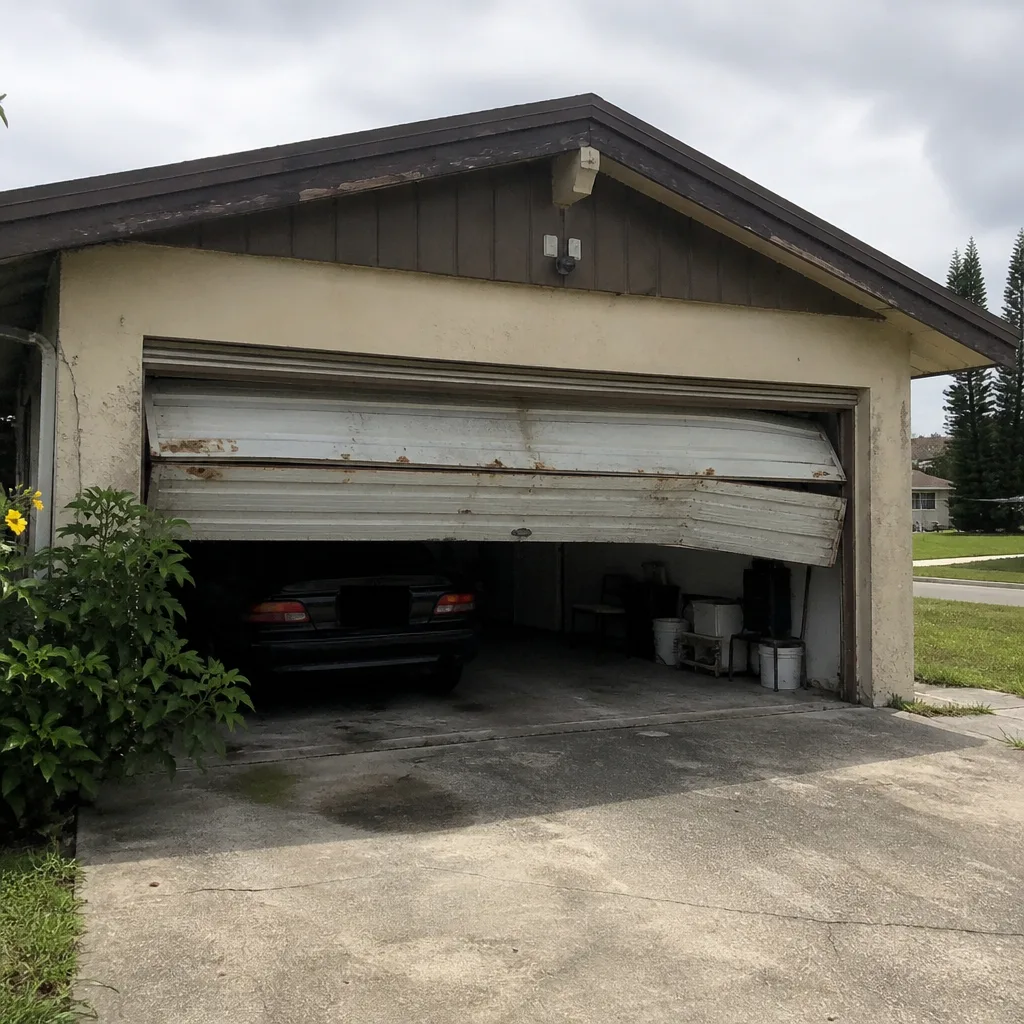 Before
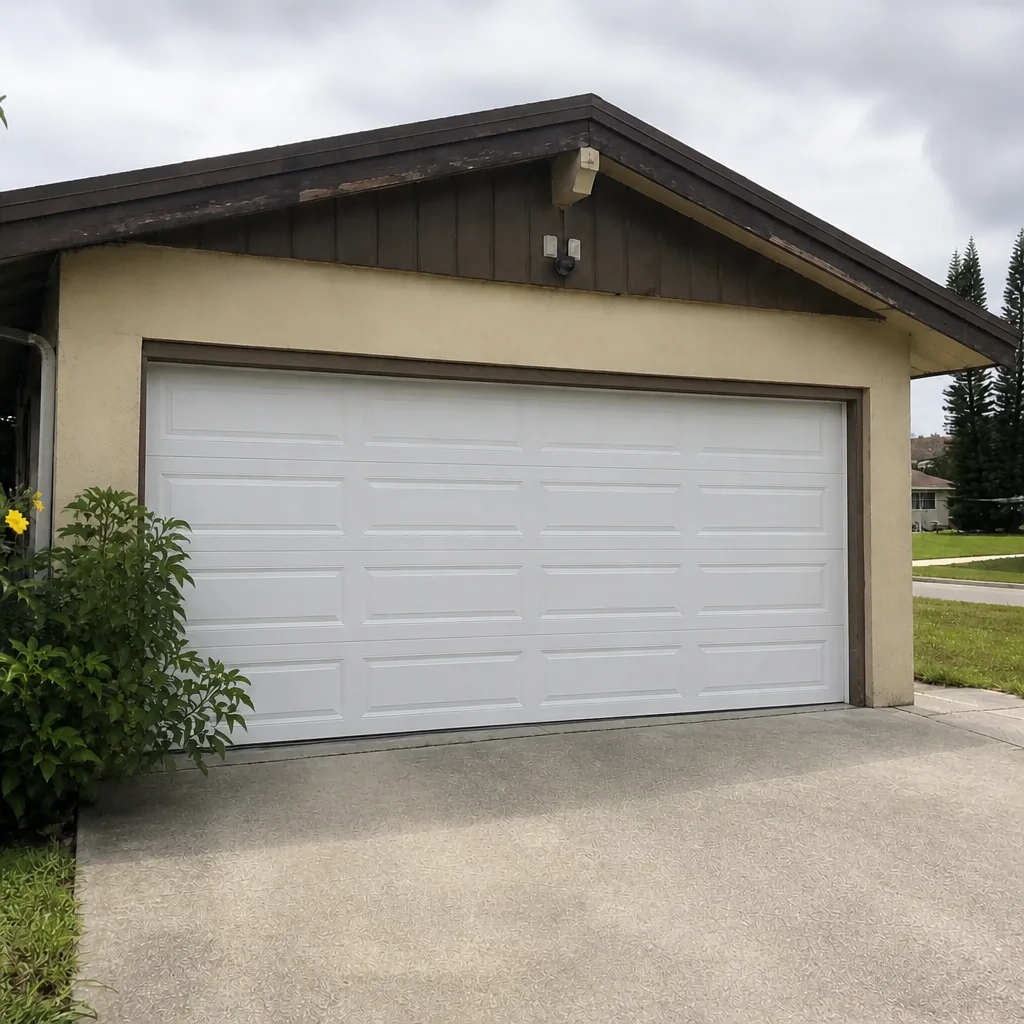 After
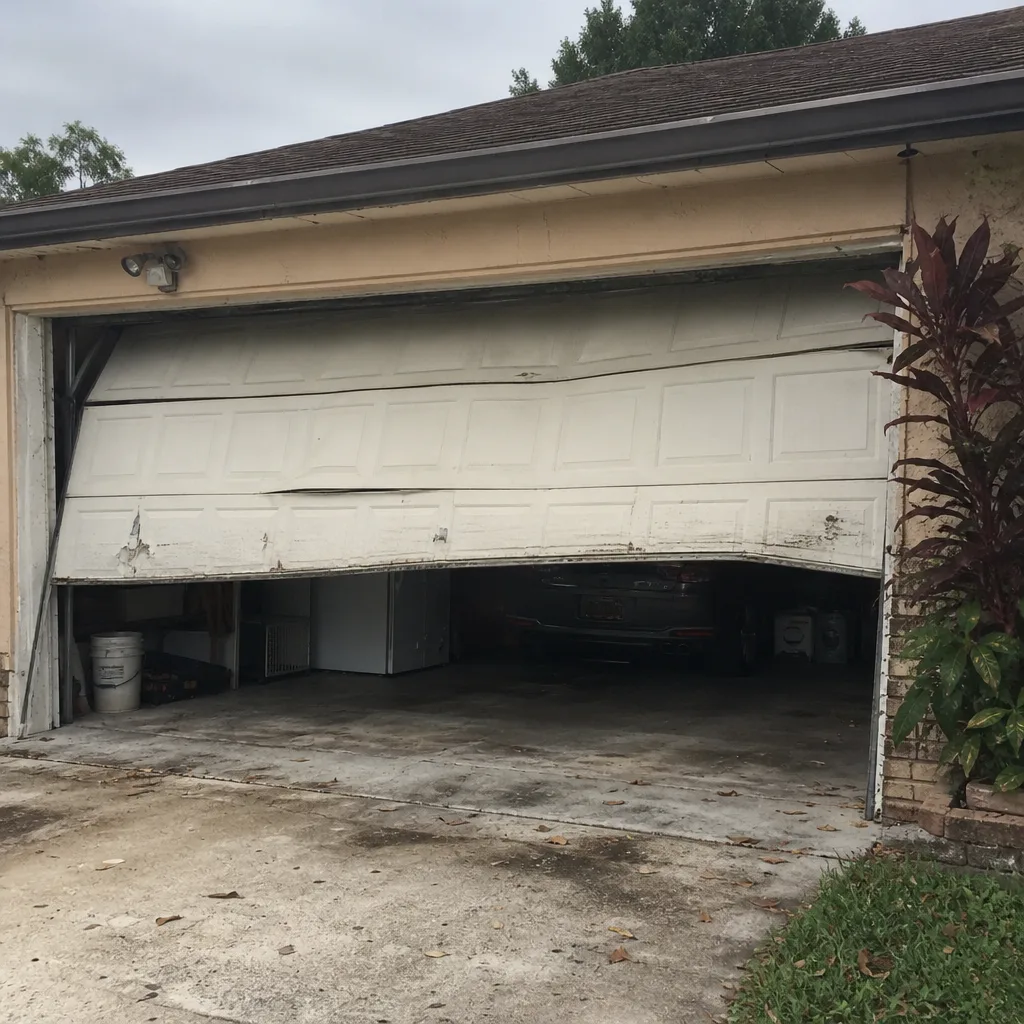 Before
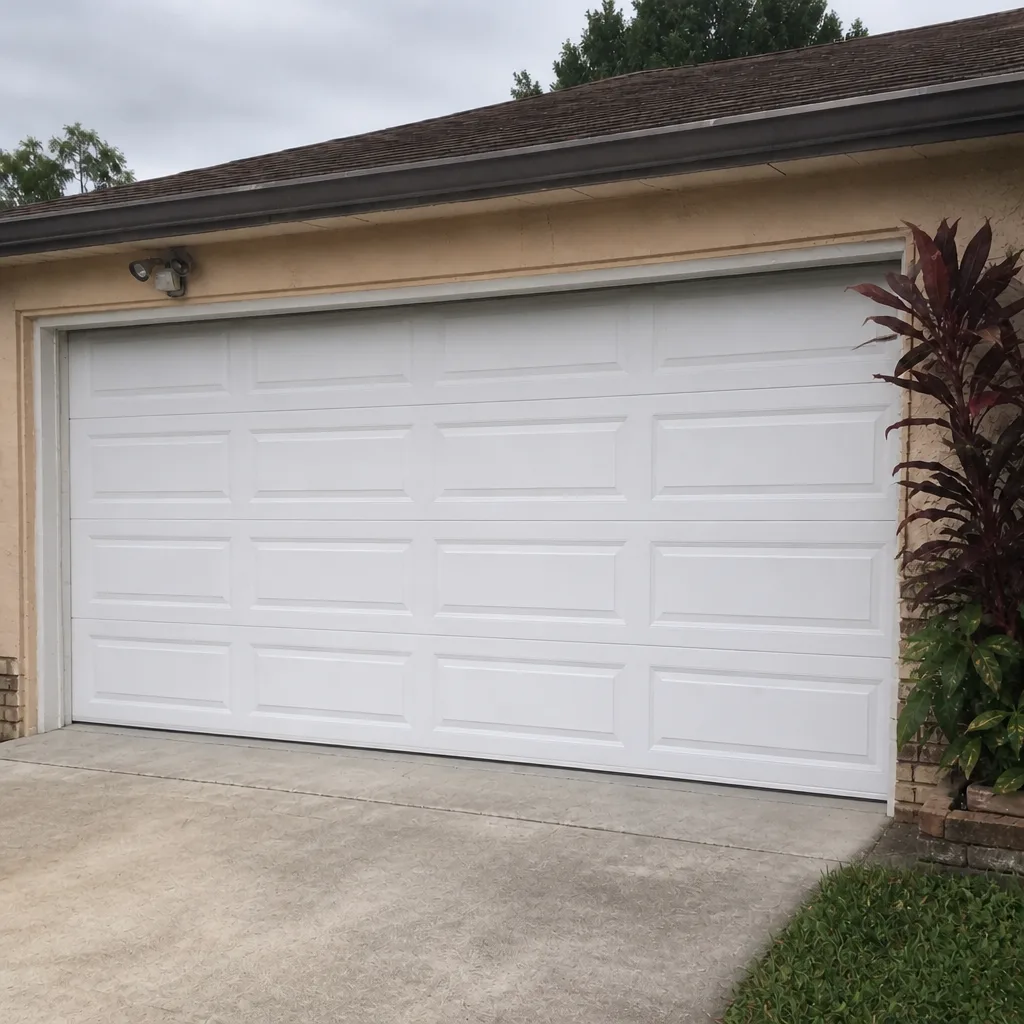 After
Frequently Asked Questions
Schedule it in April or May, before hurricane season starts on June 1. That’s the most important window, because it’s your last chance to catch wind-load hardware and battery backup issues before storms. Add a dry-season pass in December or January for lubrication and weatherstripping.
Yes. Wind load on a garage door is significant, and the hardware on a hurricane-rated door is designed to hold under that load. Check the torque on hinges and brackets, verify anchor bolts, and test battery backup on the opener before June 1. A door that checked out last year still needs the same checks this year.
Look at the door in the closed position and confirm the panel lines are still parallel. Then check the tracks for bends, the springs for visible damage, and the bottom seal. Do not run the opener until those checks pass. If anything looks wrong, call a professional before operating the door.
Heat is the main cause in South Florida. The logic board on a modern smart opener runs in a garage that gets hot during the summer, and heat shortens capacitor life and stresses solder joints. Keeping the unit clear of clutter and testing battery backup twice a year helps, but eventually failing boards need repair or replacement.
Miramar’s flat topography means water pools against the bottom of the door in some spots after heavy rain. That standing water softens the rubber and grinds grit into it. If you see a pattern of degradation, replacing the seal with a quality unit and inspecting it more often during hurricane season is the practical answer.
For repair calls in Miramar, yes, same-day service is often available. Call (866) 937-7841 for an exact quote. We answer 24/7. Fast dispatch from 7am to 7pm, Sunday through Friday. Estimates are free, and the price is quoted and agreed before any work starts. Installation and replacement work is scheduled after a measure and a written price.
The Bottom Line
Maintenance in Miramar isn’t a four-season cycle. It’s two: preparation before June 1, and cleanup plus recovery from November 30 onward. The work between those dates is mostly inspection, and the work in dry season is mostly lubrication and seal replacement. Follow that schedule and you’ll avoid the failures we see most often in South Florida: snapped springs after storms, dead openers in July heat, and bottom seals worn out from standing water. And when something does need professional hands, especially on the spring side or on a door that’s taken wind load, call. Miramar Garage Door Repair Co is here for the seasonal checkup and the emergency both. Call (866) 937-7841 for a free estimate. We answer 24/7. Fast dispatch from 7am to 7pm, Sunday through Friday, and we’re closed on Saturday.
Our technicians have up to 9 years of experience.
Written by the team at Miramar Garage Door Repair Co.