
Last updated November 22, 2026
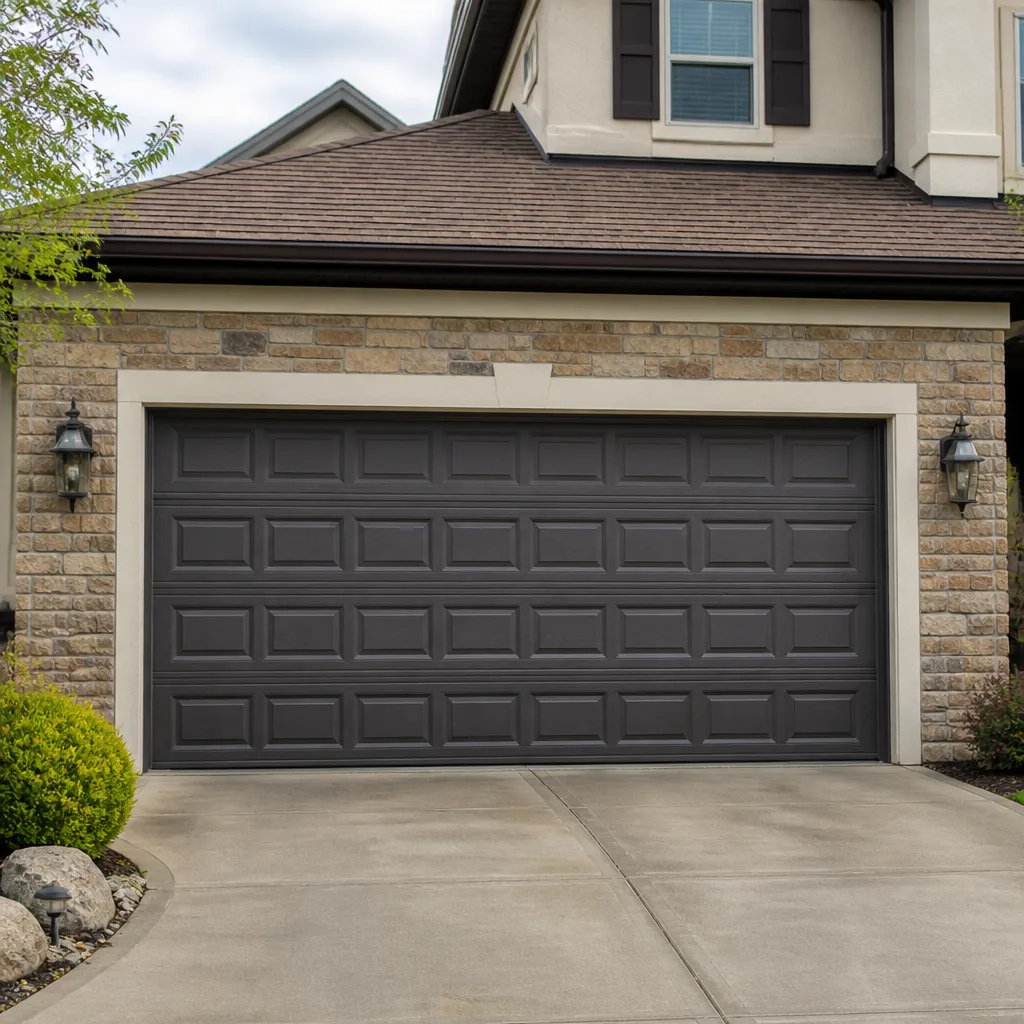 Raised-panel steel
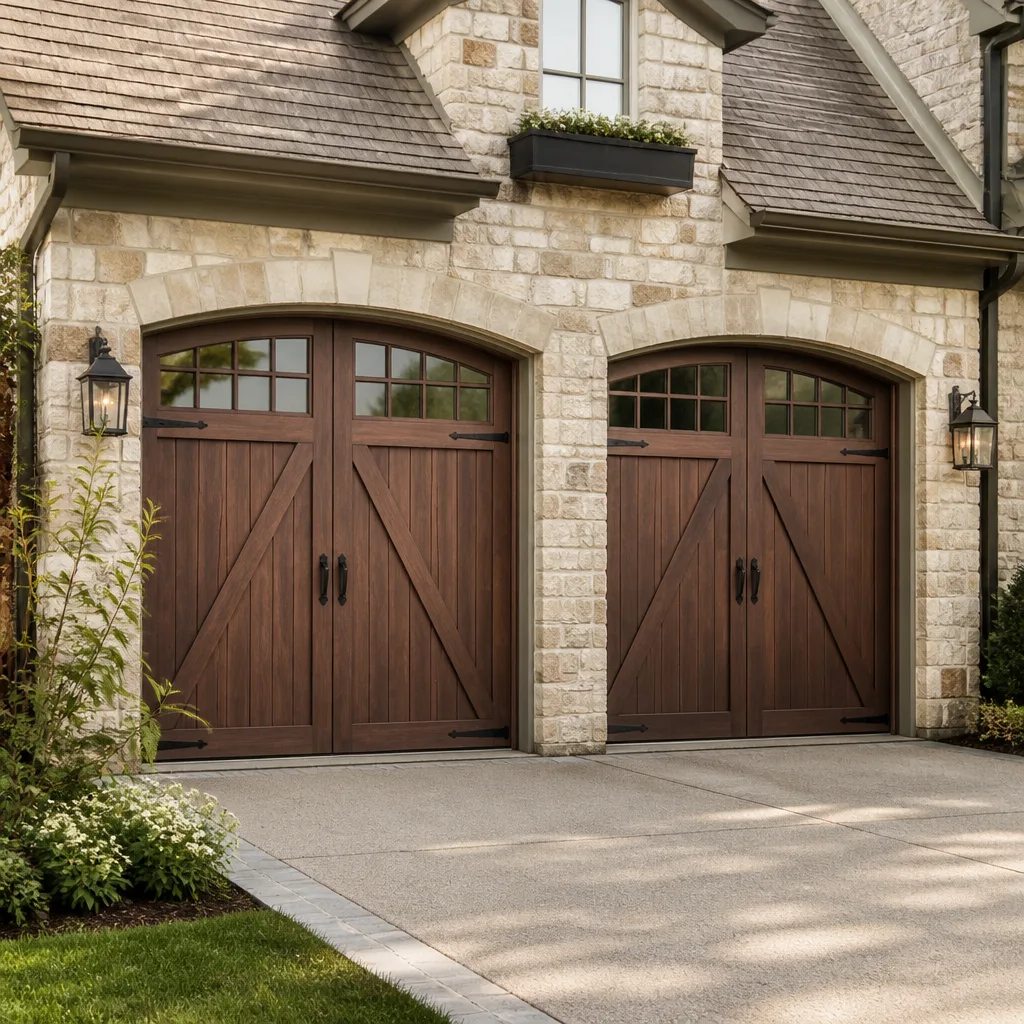 Carriage house
 Modern flush
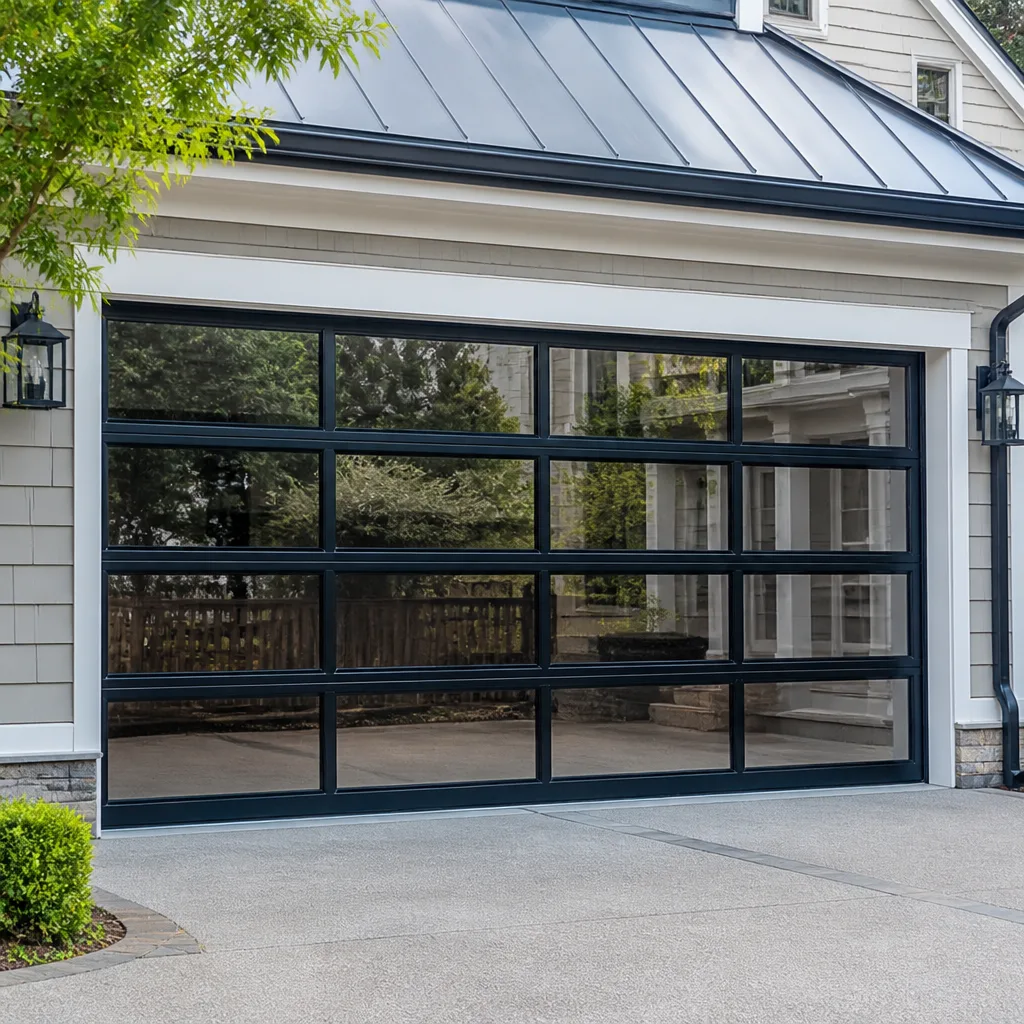 Full-view glass
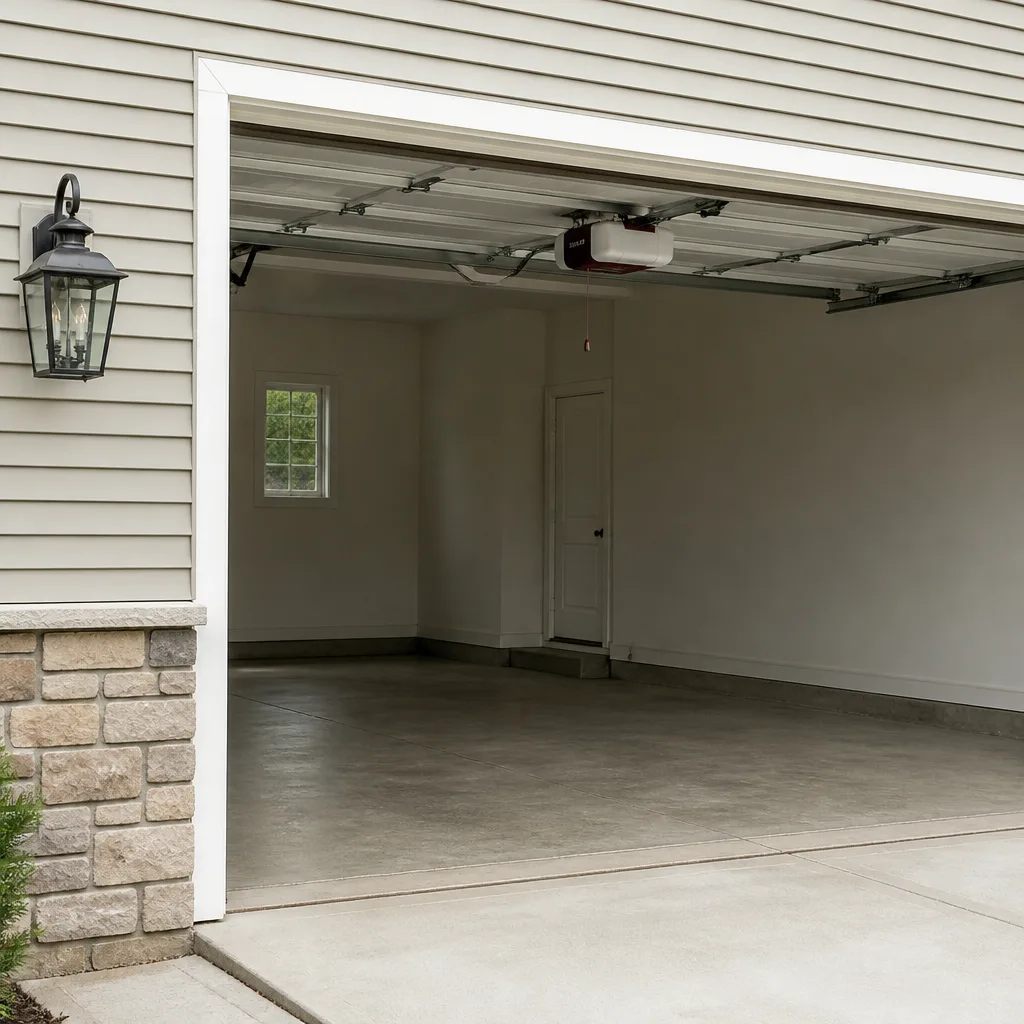 LiftMaster openers
 Chamberlain openers
Full 25-point door and opener safety check with every visit - springs, cables, rollers, tracks, and your LiftMaster or Chamberlain opener included
You get a price before we start. It does not change when the pro arrives.
Get your free estimateGarage Door Permits, Codes & Inspections in Miramar, FL: What You Need to Know
Most homeowners assume a garage door replacement is like swapping a light fixture: buy the door, install it, done. It isn’t. In Miramar, a new door or a structural change to an existing one is a permitted alteration, and the permit is tied to wind-load requirements that Broward County takes seriously. Skip it and you can end up with an insurance claim that gets denied after a storm, or a title problem that surfaces when you try to sell. We’ve walked Miramar homeowners through the permit process, the inspection sequence, and the awkward question of a door that was installed without one. This guide covers when a permit is required, what the inspector checks, how to retroactively permit an existing door, and where HOA approval fits in.
Quick Answer
In Miramar, replacing a garage door or altering its structural opening generally requires a building permit, while routine repairs like spring replacement, opener swaps, and panel replacement usually don’t. The permit ties the door to Florida Building Code wind-load requirements, and the job needs at least a rough and final inspection before it’s signed off. If your door was installed without a permit, Broward County has a process to retroactively permit it, though depending on what the inspector finds, the door may need to be replaced or upgraded to pass.
Styles & brands we work with
- Raised-panel steel
- Carriage house
- Modern flush
- Full-view glass
- LiftMaster openers
- Chamberlain openers
Table of Contents
- When Does a Garage Door Replacement Need a Permit in Miramar?
- Florida Building Code Wind-Load Requirements and What the Inspector Checks
- The Inspection Process: Rough and Final, Step by Step
- How to Retroactively Permit an Existing Unpermitted Door
- How Unpermitted Work Affects Florida HO-3 Homeowner’s Insurance
- HOA Approval vs. Building Code: Two Separate Processes
- Repair vs. Replacement: Which Jobs Trigger Which Rules
- Common Mistakes to Avoid
When Does a Garage Door Replacement Need a Permit in Miramar?
A full garage door replacement needs a permit in Miramar. So does any work that changes the structural opening, the header, the tracks’ anchoring into the wall, or the door’s rated wind-load classification. What usually does not need a permit is repair work that returns the door to its original, already-permitted condition: a snapped spring, a stripped gear in the opener, a broken hinge, a single damaged panel swapped for a matching one.
The line between repair and replacement isn’t always obvious to a homeowner, and it’s worth knowing before you schedule anything. Here’s how the two categories usually split in practice:
- Permit typically required: new door installation, full door replacement (even a same-size swap), changing the door type or material, structural reinforcement of the opening, changing the opener in a way that alters the door’s rated assembly (uncommon but possible)
- Permit typically not required: spring replacement, opener repair or like-for-like opener swap, single-panel replacement, roller and hinge replacement, track realignment, weather seal replacement, safety sensor work
The reason a same-size door swap still needs a permit is that the permit isn’t really about the physical size. It’s about the wind-load rating. In Broward County, a garage door is one of the largest openings in the building envelope, and the door you install has to be rated, labeled, and installed to a specific design pressure that the county can verify. A licensed installer knows the required rating for your address. A door swapped without a permit is an unknown quantity, and that’s the door the county and your insurer care about.
If you’re unsure which category your project falls into, we can look at it with you before you commit. Our garage door repair team makes the call on repairs every week in Miramar and will tell you plainly whether a permit is in play. For anything that touches the full door assembly, we treat it as a permit situation until proven otherwise.
Florida Building Code Wind-Load Requirements and What the Inspector Checks
Florida Building Code Section 1609 governs wind-load requirements for exterior components in high-wind regions, and Broward County sits in one of the strictest wind zones in the state. What that means in plain terms is that the garage door you install has to be a product rated for the wind pressure your specific location requires, and it has to carry a label showing that rating. The inspector doesn’t just eyeball the door. They check the label, the anchorage, and the installation details against what was submitted with the permit.
The items a garage door inspector is usually looking at:
- The product approval label. Every code-compliant wind-rated door carries a label with a Florida Product Approval number or Miami-Dade NOA number. No label, no pass. This is the number one reason a door fails inspection.
- Design pressure rating vs. required rating. The door’s label has to meet or exceed the design pressure required at your address. A door rated for a lower zone will not pass even if it looks identical.
- Anchorage into the wall. The tracks and the header attach to the structure. The inspector checks that the fasteners go into the correct structural members and that the anchor spacing matches the installation instructions and the permit.
- Reinforcement components. Many wind-rated doors use struts or reinforcement bars across the panels. Those have to be installed as specified, not left in the box.
- The opener’s role. If the door uses an opener, the inspector may check that the opener doesn’t interfere with the door’s rated performance and that safety features are functional. Smart openers from LiftMaster or Chamberlain are common in Miramar homes and are fine, but they have to be installed to the door manufacturer’s requirements.
Brand and product matter here. Doors from Clopay, Amarr, Wayne Dalton, and Raynor are all widely approved for Broward County when the specific model carries the right rating, but the model matters, not the brand name. A door that passes on one street might not pass on another if the required rating differs. If you’re planning a replacement, the door selection has to happen before the permit is submitted, not after.
The Inspection Process: Rough and Final, Step by Step
A permitted garage door replacement typically goes through two inspections: a rough inspection before the door is fully installed and finished, and a final inspection after. The rough inspection checks the structural prep and anchorage; the final confirms the installed door matches the permit and passes the operational and safety checks. The exact sequence and what each inspection covers can vary with your specific permit, so confirm the sequence with the city’s building department when you pull the permit.
Here’s how a permitted replacement usually runs:
- Door selected and permit submitted. The door model, wind rating, and product approval numbers go on the permit application. This is where the design pressure for your address gets matched to the product.
- Permit issued. Work can start. Anything installed before the permit is issued is unpermitted work, even if the permit is later pulled.
- Opening prepped and anchoring inspected (rough). The old door comes out, the header and tracks are checked or modified, and the inspector confirms the anchorage is going into structural members as specified. This is a good moment to have the inspector out if your permit calls for a rough inspection.
- New door installed. The rated door goes in with its reinforcement and labeling intact and visible. The installer sets the springs and balances the door.
- Safety and operational checks. Openers get set for travel, force, and safety sensor function. Balance, seal contact, and full smooth travel get verified. These matter at final because a failing safety sensor fails inspection.
- Final inspection and sign-off. The inspector verifies the label, the anchorage, the door operation, and the paperwork. Sign-off is the goal, and it’s the record your insurer and title company care about.
The good news is that a well-run job passes without drama. The typical failure in Miramar isn’t the installation; it’s the paperwork. Missing product approval, wrong model on the permit, or a reinforcement part left off. Our garage door installation work starts with the door selection and the permit application, not with the truck. That sequencing is what keeps the final inspection short.
How to Retroactively Permit an Existing Unpermitted Door
Retroactively permitting an unpermitted garage door is possible in Broward County, and it’s the right move if you’re selling, refinancing, or staring down an insurance question. The process starts with the county or city building department: you apply for a permit as if the door were being permitted for the first time, disclose that the work is already done, and pay the permit fees. The inspector then evaluates what’s there. The door may pass as-is, may need to be brought up to the current wind-load rating with reinforcement or hardware changes, or in the worst case may need to be replaced if it can’t be upgraded to a compliant rating.
Here’s the usual sequence:
- Confirm the door’s identity. Open the door, find the product approval label or NOA number on the door, and record the make and model. If there’s no label, take photos and note what’s visible. A Raynor or Clopay door from a past decade may still be identifiable from its label.
- Call the building department. Ask how to apply for a permit on existing unpermitted work on a garage door at your address. Each jurisdiction has its own form and process, and asking up front saves a rejection.
- Submit the application and pay the fees. Permit fees vary by scope and jurisdiction, so the building department quotes them, not us. Plan for the fee plus whatever compliance work the inspector requires.
- Schedule the inspection. The inspector evaluates the door against current requirements. If the door is compliant, you’re done. If not, you get a list of required corrections.
- Complete corrections and re-inspect. Corrections can range from adding reinforcement to replacing the door entirely. You’ll know which before you spend the money.
- Get the signed-off permit. Keep a copy. It’s the document that closes the loop with your insurer and your title company.
The honest answer on whether the door needs to be replaced: often not, sometimes yes. Older doors that predate current wind-load standards may not be upgradeable, and the inspector’s evaluation decides that. Either way, the retroactive permit is far cheaper than the alternative discovered at closing.
How Unpermitted Work Affects Florida HO-3 Homeowner’s Insurance
Unpermitted garage door work can complicate a claim under a standard Florida HO-3 policy, particularly after a wind event. Insurers evaluate claims based on whether the damaged component was code-compliant at the time of loss and whether the work was done to code. If the door was replaced without a permit and without the correct wind rating, the adjuster has a legitimate reason to question the claim, and the policy may exclude or reduce coverage for work that wasn’t permitted or code-compliant. That’s the practical risk: not that the door is bad, but that the door’s paperwork gap leaves the claim exposed.
The insurance angle is why we treat a permitted replacement as part of the job, not an add-on. It also means that if you’re unsure whether your existing door is permitted, finding out before you need to file a claim is worth the effort. A permitted door has a paper trail. An unpermitted door doesn’t.
A few practical points:
- Check your policy language. Most HO-3 policies require code compliance for covered repairs. The exact language varies, so read it or ask your agent.
- Know your wind mitigation situation. Florida insurers often apply credits for wind-mitigation features, and garage doors are part of that picture. An unpermitted or non-rated door can affect that assessment.
- Retroactive permitting protects the claim, not just the resale. A retroactively permitted door that passes inspection is a documented compliant assembly.
- Ask before you assume. If you’re buying or selling a Miramar home, a title search can surface unpermitted work. Resolving it before closing is far simpler than resolving it after.
We can’t advise on your specific policy, and we don’t. But we can tell you whether the door on your house carries a compliant rating label, which is the fact your agent will need. That check is part of our garage door spring repair and inspection work when a homeowner asks, and it’s free with an estimate.
HOA Approval vs. Building Code: Two Separate Processes
Building code approval and HOA approval are two separate processes, and a Miramar homeowner planning a replacement may need both. The building department looks at wind-load compliance, product approval, and installation quality. The HOA looks at appearance, color, style, and whether the door matches the community’s architectural standards. Passing one does not satisfy the other, and the two submissions usually happen on different timelines with different forms.
The practical sequence:
- Select the door. Pick a style and model that meets both the wind rating required by code and the HOA’s appearance requirements. Some HOAs restrict panel styles, colors, or window patterns.
- Submit to the HOA first. Get written architectural approval for the specific model and color before ordering. HOA approval usually has to be in hand before the door ships, and it can take longer than the permit.
- Submit the permit. With the door selected and HOA-approved, apply for the building permit. The permit and the HOA approval are separate documents and neither one substitutes for the other.
- Install and inspect. The installation follows the permit sequence above.
- Keep a file. HOA approval letter, permit, and inspection sign-off. If you sell, this file is the simplest answer to any question.
One wrinkle worth knowing: HOAs sometimes approve a door that doesn’t carry the required wind rating, or vice versa. The door has to satisfy both. If you’re in a Miramar community with architectural review, we can flag the code-side requirements when you’re choosing the door, and point you to the HOA submission with the right spec sheet. Most HOAs want the product approval documentation with the submission anyway.
Repair vs. Replacement: Which Jobs Trigger Which Rules
The permit question depends entirely on which category the job falls into, and homeowners often ask us to draw the line on specific work. Here’s the plain-English version of how common garage door jobs in Miramar split between permitted and not:
- Snapped or broken torsion spring: repair, no permit. Spring replacement is a mechanical repair to the existing door. It’s also the most dangerous job on the door, and it’s why we handle it as a specialty. A trained technician with the right winding bars, spring sizing, and door weight knowledge is what makes this a routine job instead of a dangerous one.
- Stripped gear or dead opener: repair, no permit when it’s a like-for-like swap or a repair. Opener repair on a LiftMaster or Chamberlain system is routine work. If the opener is being changed and the door’s rated assembly is affected, a permit conversation may be needed, but that’s uncommon.
- Single panel replacement: repair, no permit, as long as the new panel matches the existing rated assembly and the foundation isn’t being altered.
- Full door replacement: permit required. Even a same-size swap needs the wind-load rating and product approval on record.
- Structural opening changes: permit required, and usually a structural review. Changing the width or height of the opening is a different category of project.
- Track anchoring changes: permit required if the anchorage is being reworked. A simple realignment of existing tracks to their original anchors is repair.
Two things to keep in mind. First, avoiding a dangerous spring repair because you’re worried about permits is a mistake; spring work never needs one. We’ve seen homeowners hesitate on a snapped spring for the wrong reason. For that work, call us and we handle it. Second, a repair that quietly becomes a replacement (the door is beyond saving) is a moment to pause and pull the permit, not to let the crew proceed and hope nobody notices. For the full range of work, see Miramar Garage Door Repair Co.
Common Mistakes to Avoid
- Assuming a same-size swap needs no permit. The permit is about the wind rating, not the dimensions. A same-size door without a permit is unpermitted work, and the county can require retroactive permitting years later.
- Accepting a contractor’s “we don’t need one for this.” Ask the contractor to put in writing whether they’re pulling a permit, and ask for the permit number. If they won’t, get another installer. This is the single biggest cause of the unpermitted-door problem in Miramar.
- Ordering the door before checking the required rating. Door selection is inseparable from the permit. A door chosen before the design pressure is confirmed can fail inspection or can’t be permitted at all, and the door is already paid for.
- Skipping the HOA step until after installation. An HOA can require a door to come out after install if the appearance wasn’t approved. Getting the HOA approval first is not optional in many Miramar communities.
- Treating a failed final inspection as a formality. A failed final can mean re-inspection fees and correction work. Address whatever the inspector flags before scheduling the re-inspection, not during it.
- Assuming the title company will catch it. A title search can surface unpermitted work, but by then you’re negotiating with a buyer who knows. Resolve it before listing.
- Believing insurance will “just handle it.” HO-3 policies can reduce or deny coverage for unpermitted work. A permitted door is the version of the asset your insurer can actually verify.
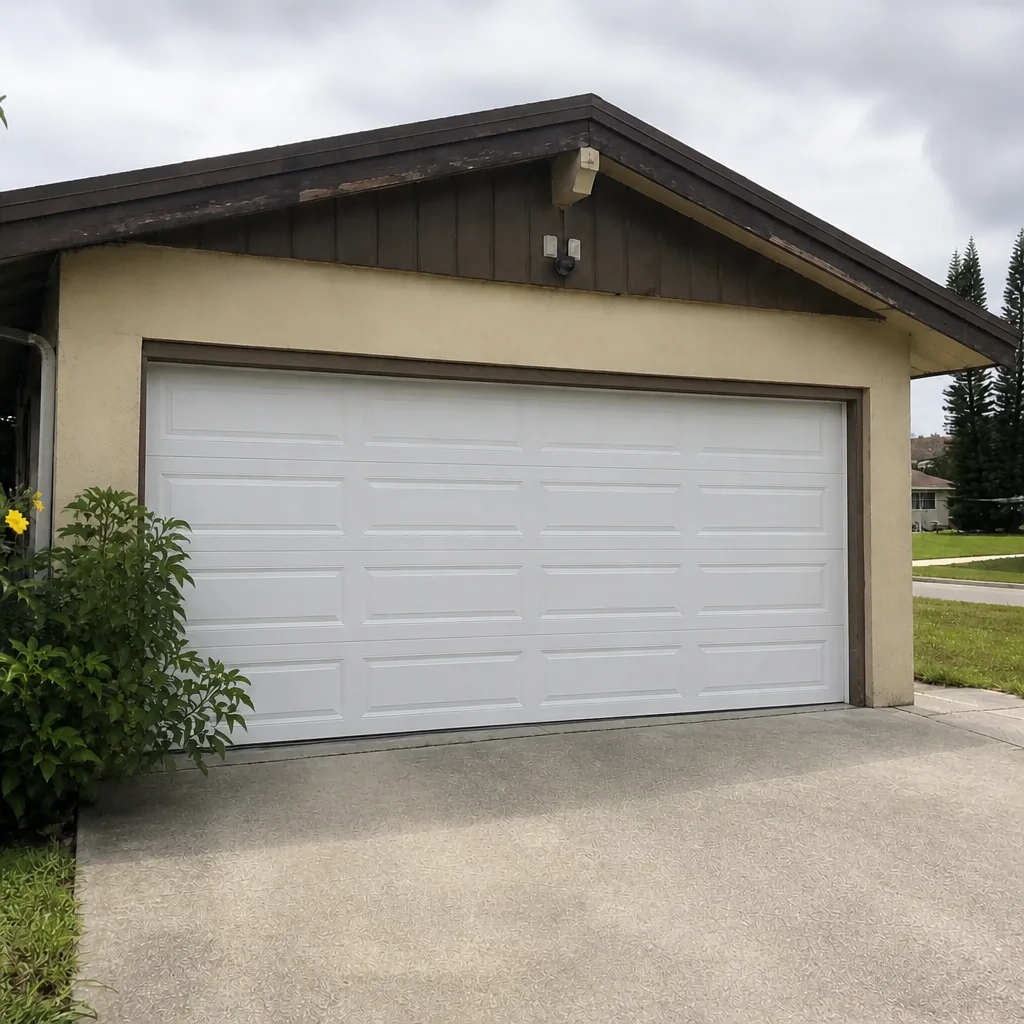
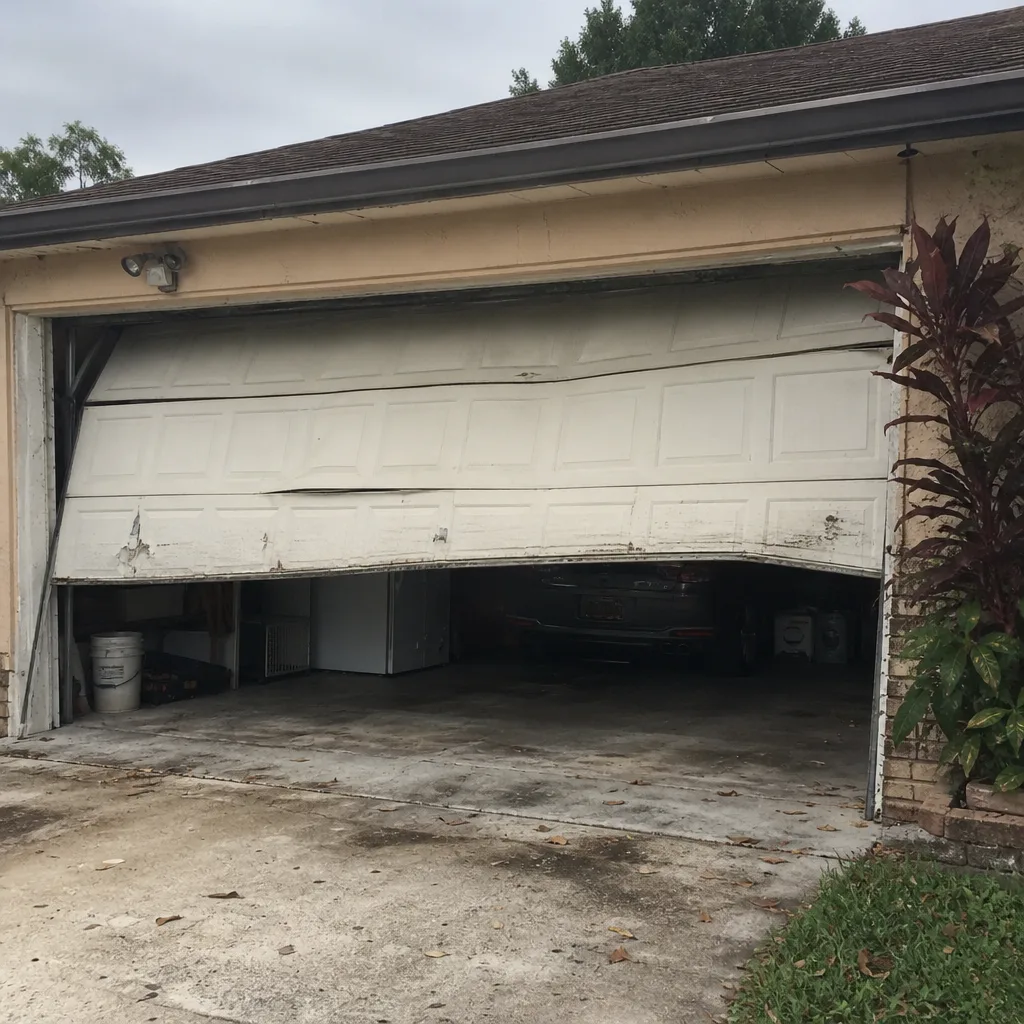
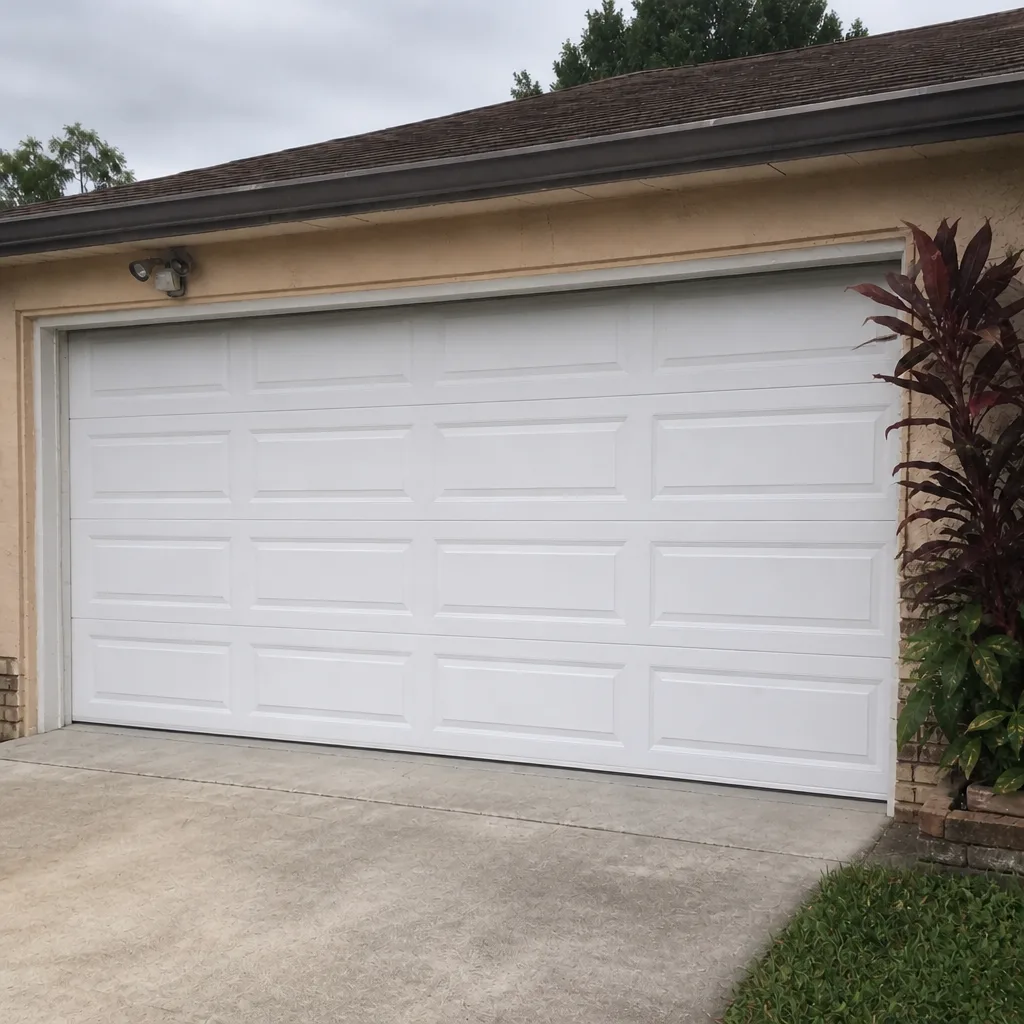
See the difference
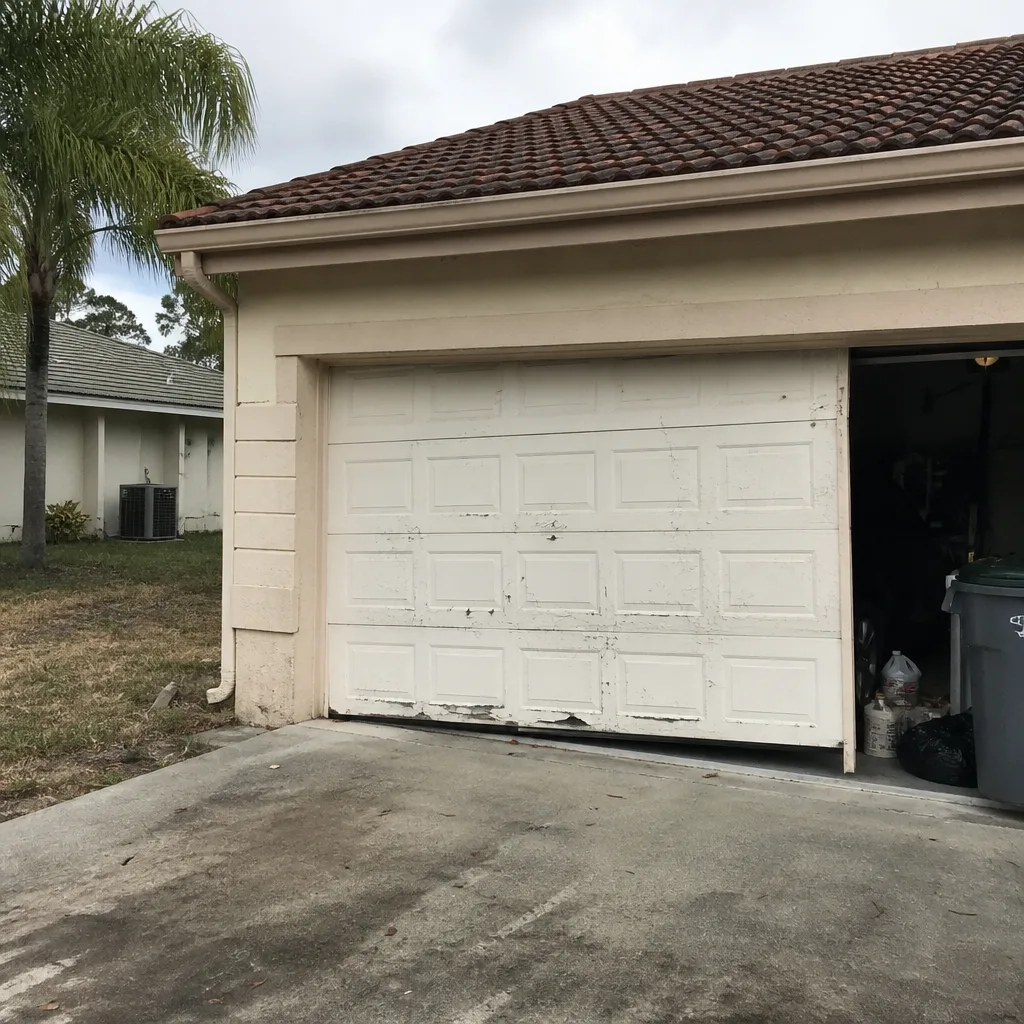 Before
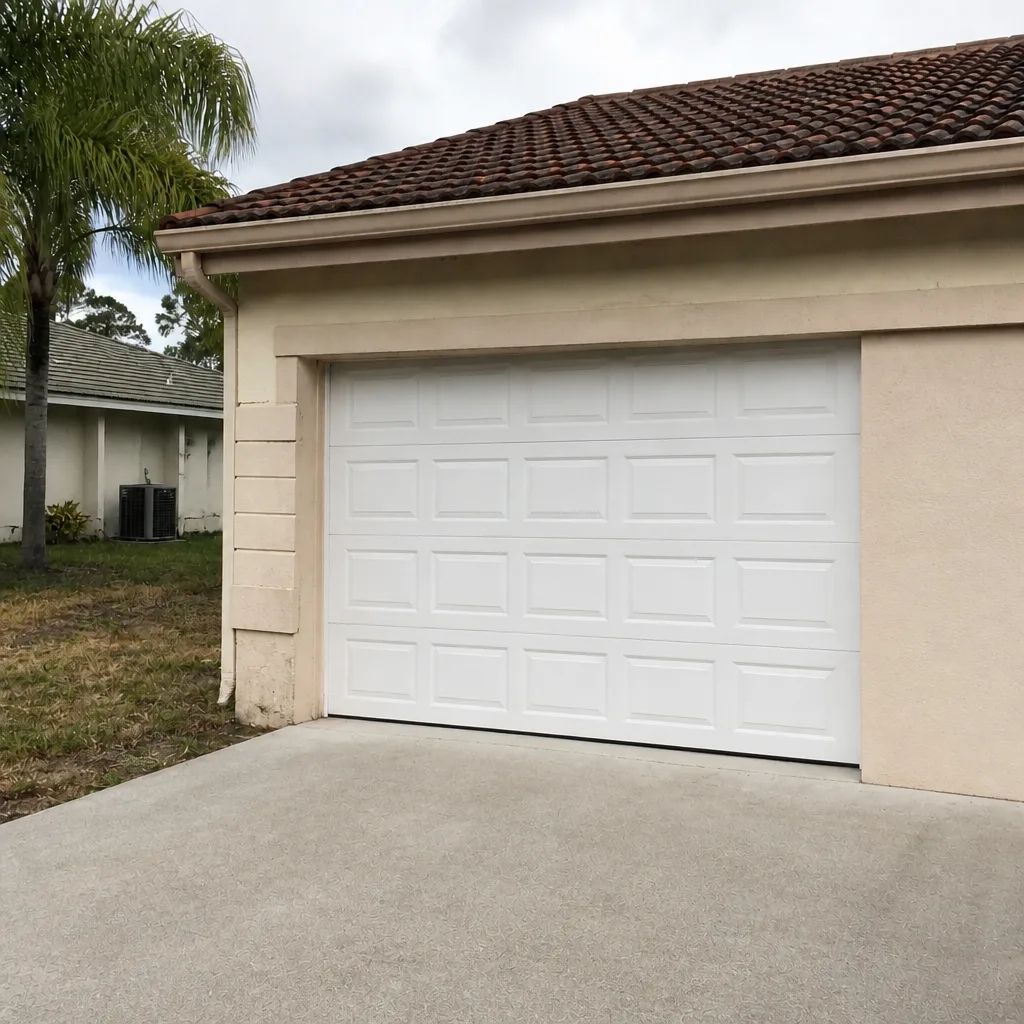 After
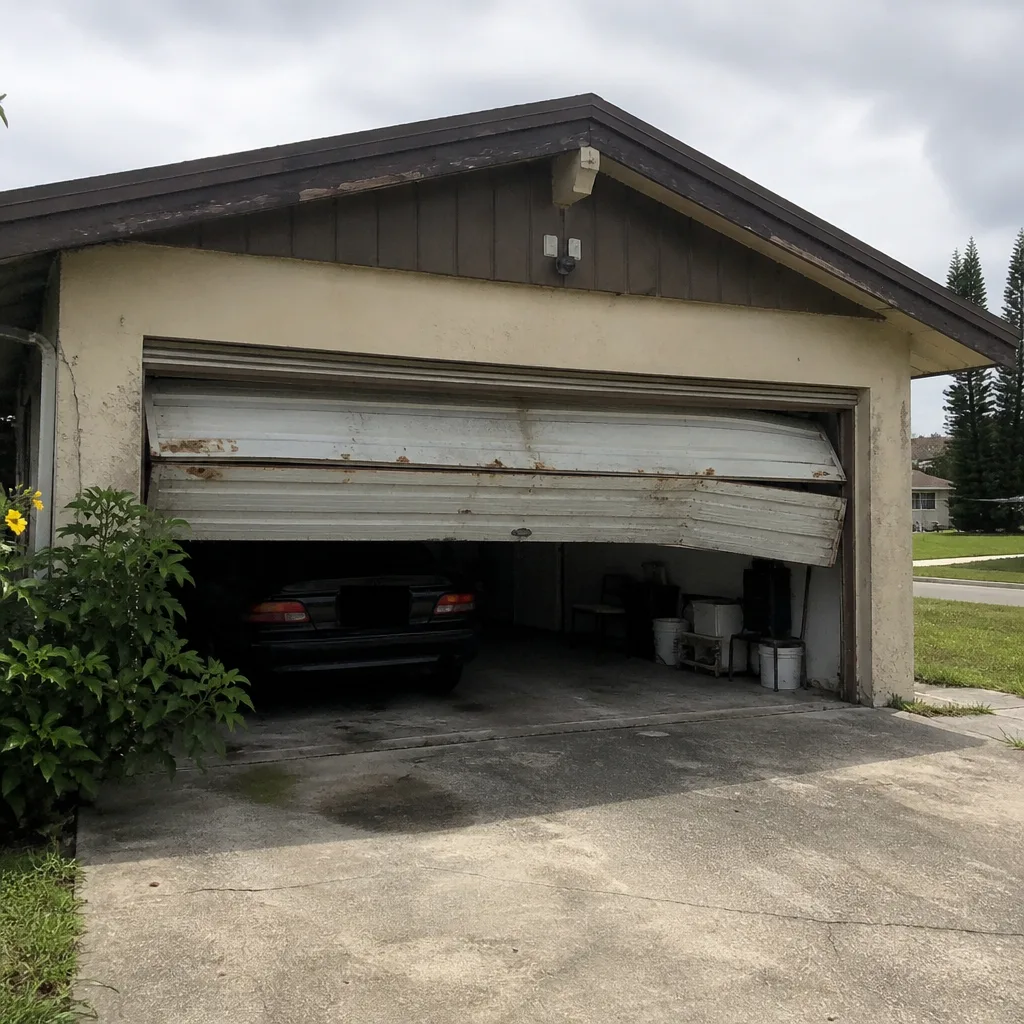 Before
 After
 Before
 After
When to Call a Professional
Call a professional when the job involves a spring, an opener, a structural opening, or a full door replacement. Spring work is genuinely dangerous: the torsion system on a garage door holds serious stored energy, and a mistake can injure badly. We don’t recommend trying it, and we don’t walk anyone through doing it. For a broken spring, a dead opener, a door that won’t close, or a full replacement, get a trained technician out to look at it.
For anything permit-related, call us before you pick the door. Our technicians have up to 9 years of experience, and we work on the major brands, including Raynor, LiftMaster, Chamberlain, and Genie, so we know what a compliant installation and a passing inspection look like. Miramar Garage Door Repair Co offers free estimates in Miramar. Call (866) 937-7841. We answer 24/7. Fast dispatch from 7am to 7pm, Sunday through Friday.
Frequently Asked Questions
Yes, a full garage door replacement in Miramar generally requires a building permit, because the new door must be rated to the wind-load requirements for your address and carry a Florida Product Approval or NOA label. Routine repairs like spring replacement and opener repair usually don’t require a permit. Call (866) 937-7841 for an exact quote on your project; estimates are free.
No, a spring replacement is a mechanical repair to the existing door and does not normally require a building permit in Miramar. It’s also the most dangerous job on a garage door because of the stored energy in the torsion system, so it’s work for a trained technician, not a homeowner. Call (866) 937-7841 for spring pricing and we’ll be straight with you about what the job involves.
The inspector checks the door’s product approval label against the wind-load design pressure required for your address, the anchorage into the structural members, the reinforcement components, and the door’s operation and safety features. Missing or wrong-rated labels are the most common reason a final inspection fails. If you’ve received a correction notice, call (866) 937-7841 and we’ll look at what’s flagged before you schedule the re-inspection.
Yes, Broward County allows a retroactive permit process for existing unpermitted work, though the exact procedure and fees are set by the building department, not us. The inspector evaluates the existing door against current requirements and either accepts it, orders corrections, or requires replacement. Call (866) 937-7841 and we’ll help you figure out what your existing door is rated for before you start the paperwork.
It can. A standard HO-3 policy in Florida may reduce or deny coverage for work that wasn’t permitted or code-compliant, especially after a wind event when the adjuster looks closely at the assembly. A permitted, labeled door is the version your insurer can verify. Call (866) 937-7841 for a free inspection of what’s currently installed and whether the label is intact.
Yes, in many Miramar communities you need both, and they’re separate submissions. The HOA approves the appearance, like the style, color, and panel pattern, while the building department approves the code and wind-load compliance. Neither approval replaces the other. Call (866) 937-7841 and we’ll help you match a door that satisfies both before you order.
The Bottom Line
A garage door replacement in Miramar is a permitted project, and the permit exists to prove the door is rated for the wind it will face. Repairs like spring replacement and opener fixes usually don’t need one. If you have an existing unpermitted door, Broward County can retroactively permit it, and it’s worth doing before you sell or file a claim. The three things to walk away with: permit before the door ships, HOA approval for the specific model, and inspection sign-off on file. That paperwork is what protects the door you just paid for. Call (866) 937-7841 for a free estimate on repair, replacement, or a compliance look at what’s on your house now. We answer 24/7. Fast dispatch from 7am to 7pm, Sunday through Friday.
Written by the team at Miramar Garage Door Repair Co.